10 Useful Photography Accessories
What useful accessories can improve your photojournalism work? Microfiber cloth, air blower, tripod, monopod, flash diffuser, hand warmers, Gorillapod, filters, Expodisc: here is a brief overview of practical accessories.
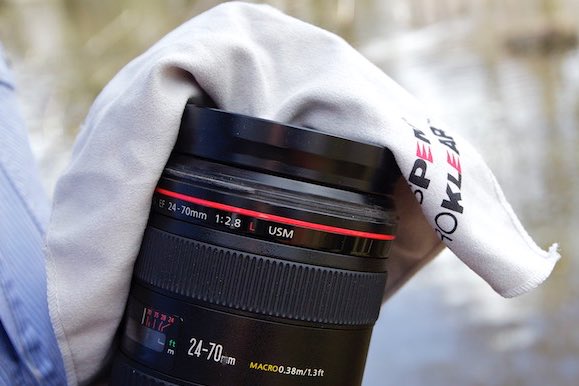
1: A microfiber cloth and a small towel
Lint-free, anti-static so that it does not attract dust, and effective at absorbing grease, a microfiber cloth is an essential accessory for cleaning all your lenses and, if necessary, your screens (both the camera body and computer screens).
Also useful: a small towel, so that you can occasionally wipe your equipment when it rains. This small cotton towel measures approximately 30×30cm or 30×50cm. It is easy to find in shops such as Ikea or Okay (bath linen section), as well as in most supermarkets.
2: An air blower
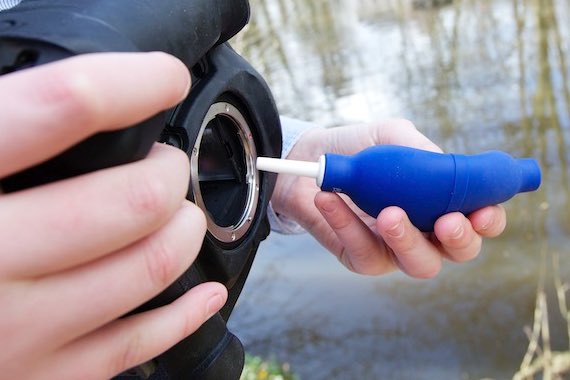
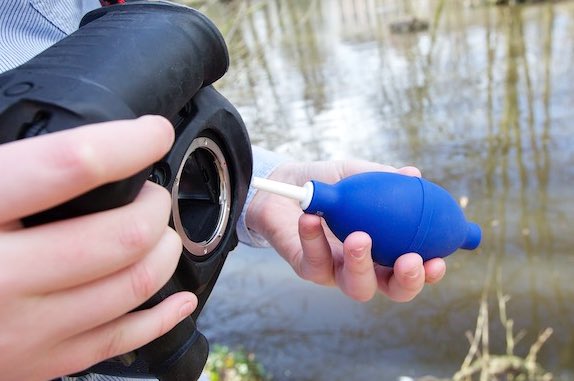
Inexpensive, an air blower removes much of the dust and particles from the camera sensor and lenses. Unlike a can of compressed air, an air blower can be used safely on the sensor. Below is an air blower from the German brand Eyelead.
3: A lens hood for your lens
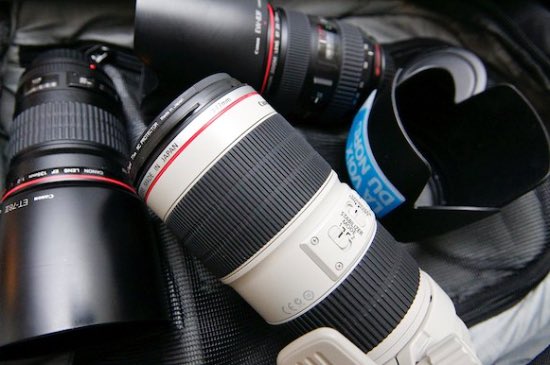
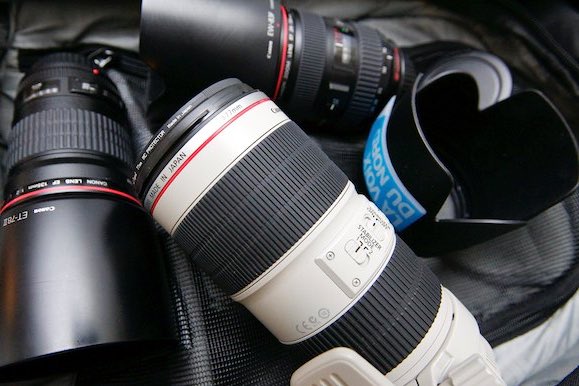
The lens hood, either optional or supplied with the lens (Canon L series, Sigma, etc.), provides excellent mechanical protection for the front element and prevents stray side light from entering, which can cause flare (bright circles in the image) and reduced contrast.
Each lens has a specific lens hood model (diameter, shape and length). It attaches to the lens and is perfectly matched to its characteristics. Contrary to popular belief, and despite its name, a lens hood is also very useful in bad weather (it provides some protection from rain), as well as in cloudy conditions or indoors, to limit incident light.
4: An “Expodisc” or a white sheet of paper
Useful for setting white balance, in other words for “calibrating” the sensor of a digital camera body so that white is rendered as true white and colours are therefore balanced.
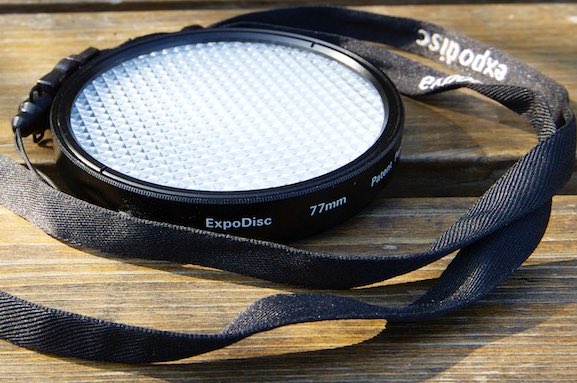
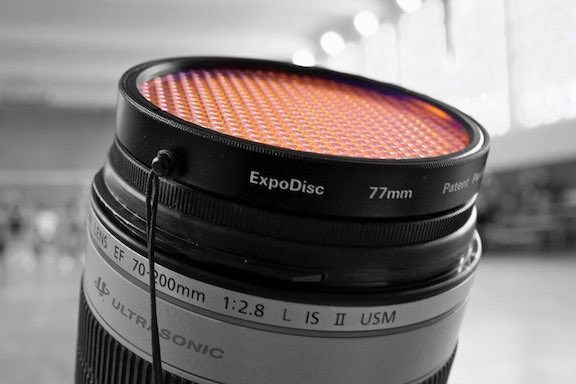
An Expodisc is a disc placed over the front element of the lens. It produces a theoretically white photograph when the lens is pointed towards the light source. This “white” photograph (which is not initially white in AWB mode) tells the camera to use it as a white-balance reference: consult the manual's “custom white balance” section for the exact procedure. Manually adjusting white balance by photographing a sheet of white paper under the same lighting also works, but it is less convenient! This solution is very reliable, but only in sports halls that do not use cyclical lighting
(see the “white balance” section of the sports photography page for more information).
5: A good tripod
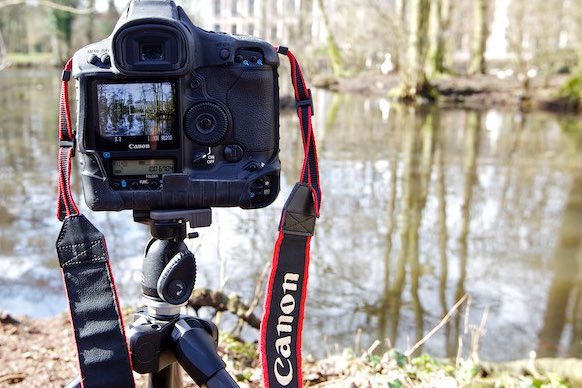
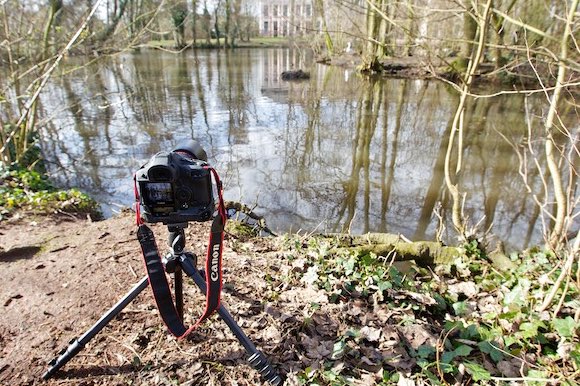
An essential accessory for long exposures, a tripod provides good stability for night photography, macro photography and landscape photography. Several points should be checked before buying one: maximum supported weight, the quality of the head (the camera should remain in the desired position when you let go), tripod weight (carbon is lighter but more expensive), maximum and minimum height, and ease of use.
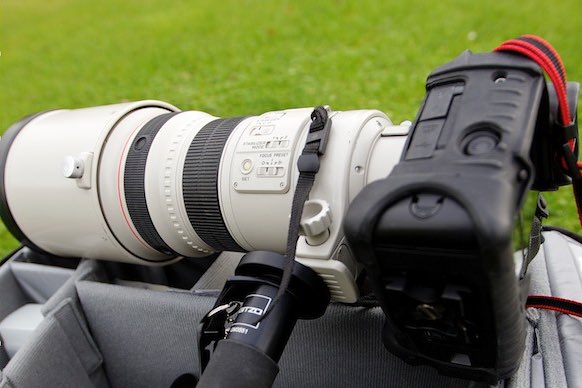
To a lesser extent, a monopod can also provide good stability for sports or wildlife photography, particularly with a heavy telephoto lens, but it is not suitable for long exposures. Consider brands such as Manfrotto, Gitzo, Benro, Bilora and Vanguard.
6: Rain protection
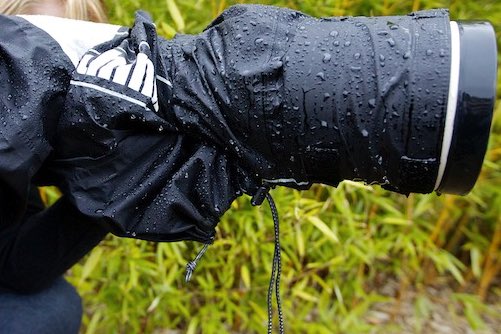
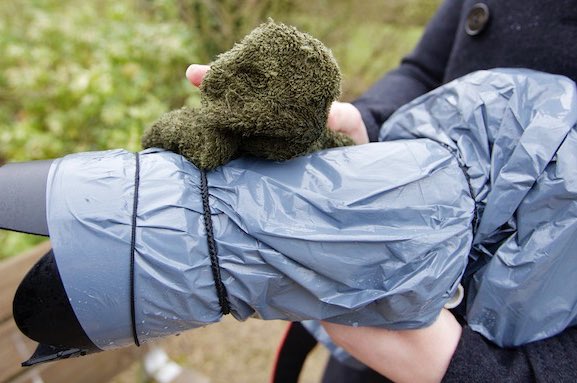
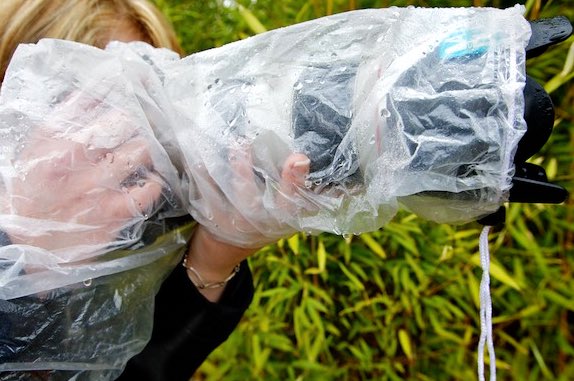
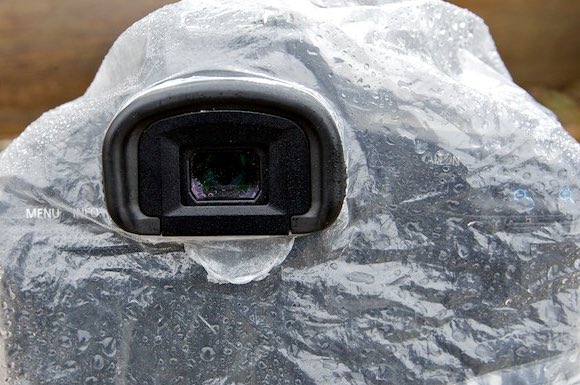
For very occasional use, a simple garbage bag is often sufficient. But if you photograph in the rain several times a year, the Optech RainSleeve cover offers the best balance between effectiveness and cost: about €10 for two covers. Unlike a garbage bag, this cover is transparent, so you can check your images on the LCD screen and you do not need to know the controls by heart. It is also very compact and quick to put on.
7: Hand warmers
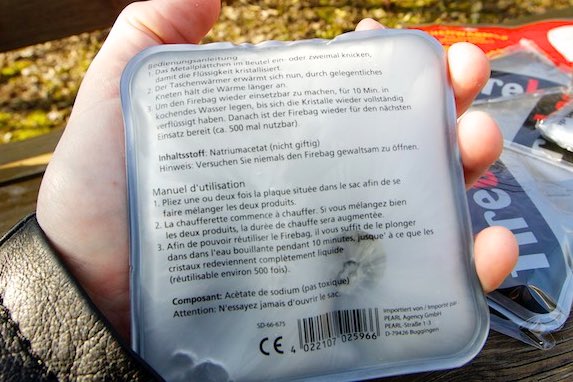
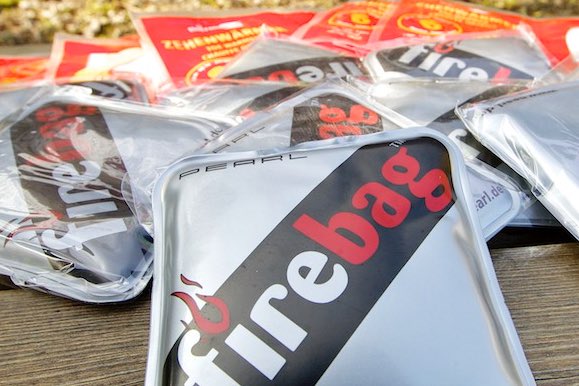
Very useful in winter, this accessory, sold notably by pearl.fr, effectively keeps photographers' hands warm. A hand warmer lasts about 20 minutes in very cold conditions, and the chemical reaction of the sodium acetate is triggered by bending a plate inside the pouch. The “FireBag” warmer (below) can be reused about 500 times. To reuse it, simply immerse it in boiling water for around ten minutes until the crystals become liquid again. The cost is modest: about €14 for 12 hand warmers. This accessory is also very useful when your lens is cold (ice hockey, football/rugby in winter, figure skating) and you enter a warm place (swimming pool, sports hall). A hand warmer (wrapped in a microfiber cloth, for example) can warm the front element of your lens and prevent condensation from forming. Another accessory of the same type, but for single use: the “Thermopad” toe warmer (about €13 for 10), attached to your socks. It lasts a long time: your feet stay at around 37°C for approximately three hours. It is a genuinely pleasant accessory when you have to photograph outdoors for long hours in the middle of winter! An equivalent version for hands is also available at the same price.
8: A diffuser for an on-camera flash
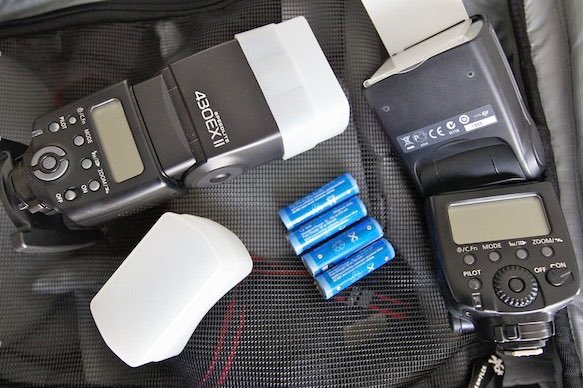
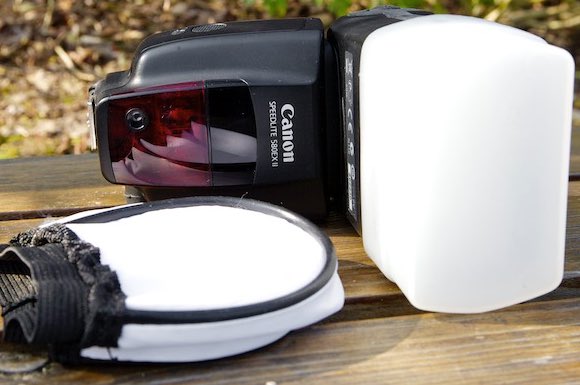
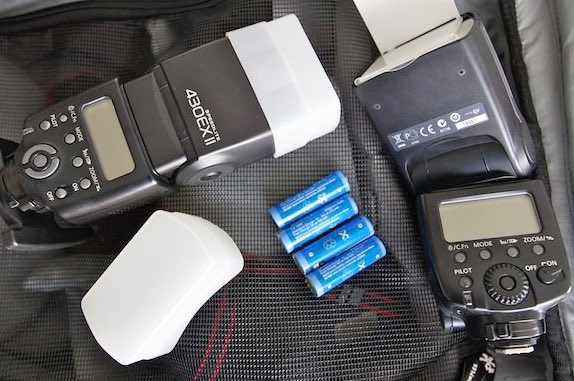
Inexpensive (from around €10), a diffuser attaches to the flash head. It softens the flash's harsh light to reduce shadows. It is useful when it is not possible to bounce the light off a ceiling or wall.
9: Filters (polarizing, ND and protective)
When you use your lens in difficult conditions (dust, mud, water droplets, sand, seaside) or if you want to permanently protect the front element against scratches and accidental impacts, protective filters are available. Protective? Not entirely neutral, since a protective filter transmits around 99% of the light received and can have a very slight effect on colour temperature. To the naked eye this remains invisible, and the main point is to protect your lenses. There are several models of protective filters, chosen according to your lens diameter (37 to 82mm) and glass quality (avoid putting a low-end filter on a €2,000 lens, and vice versa). Note that some photographers protect their equipment with UV filters: this also provides protection, but lenses are already treated against UV. Best avoided, therefore.
Another particularly useful filter for landscape photography is the neutral-density or ND filter. An ND filter reduces the amount of light entering the lens. It is an essential accessory in daylight when you want to make a long exposure. The reduction in light is indicated as follows on ND filters: ND2 for a 1-stop reduction, ND4 for 2 stops, ND8 for 3 stops, and ND400 for 9 stops.
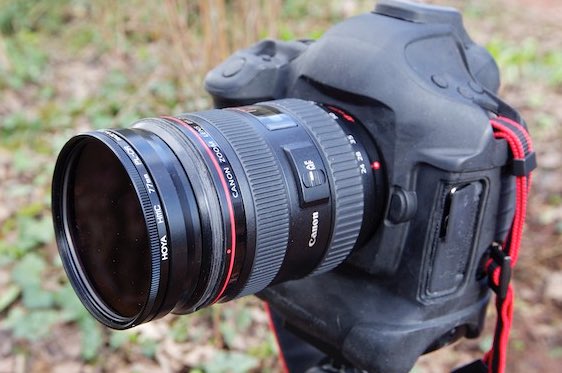
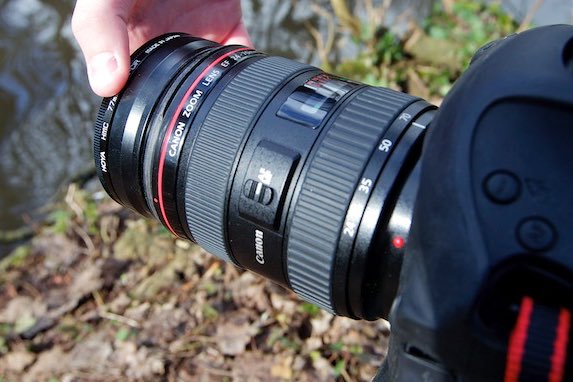
One final useful filter is the circular polarizing filter (as shown below). It reduces reflections (on water or glass, for example) and also boosts colour saturation. If you use a fairly high-end lens, choose a high-quality filter (B&W, Hoya or Rodenstock).
10: A Gorillapod
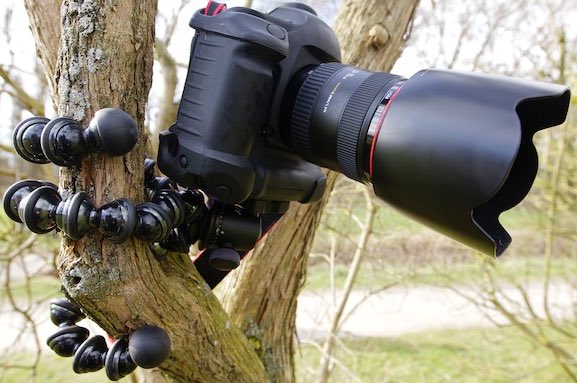
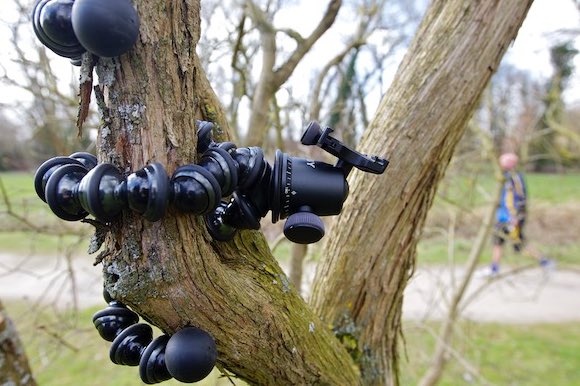
The Gorillapod is an original and highly flexible tripod designed by Joby. Its three flexible and robust legs can be attached to tree branches (as shown below), a barrier, a pipe, etc. The strongest model, the GorillaPod 5K, supports a weight of 5kg:
enough to support a professional mirrorless camera body such as a Canon EOS R3 or Canon EOS R6 Mark II, with a lens weighing 1 or 2kg.
With such a tool, the photographer's imagination is the only limit!