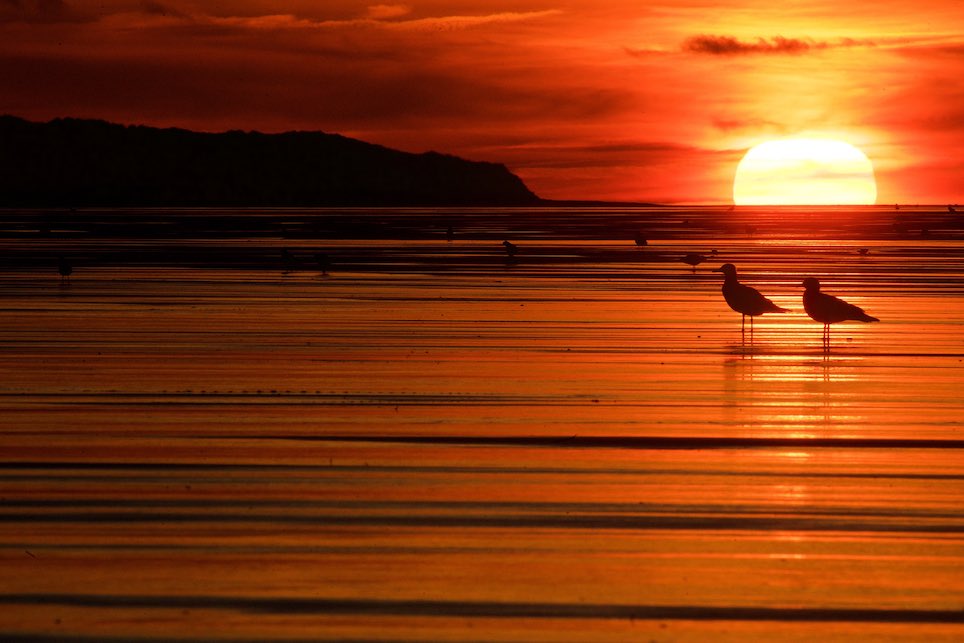
Calais-Blériot - 1DX - 400 mm - 1/800 - 1250 ISO - f/25

How to Photograph a Sunset?
My journalist colleagues regularly make fun of me about this, because I often spend time photographing sunsets along the Côte d’Opale, from Berck to Calais, via Wimereux and the Two Capes area.
Even though it brings nothing from a strictly journalistic point of view, the light is particularly beautiful there, especially in autumn and winter, and photographing a sunset is a real treat for both the eyes and the photographer. You never get tired of it! But how do you photograph a sunset?
Calais-Blériot - 1DX - 400 mm - 1/800 - 1250 ISO - f/25
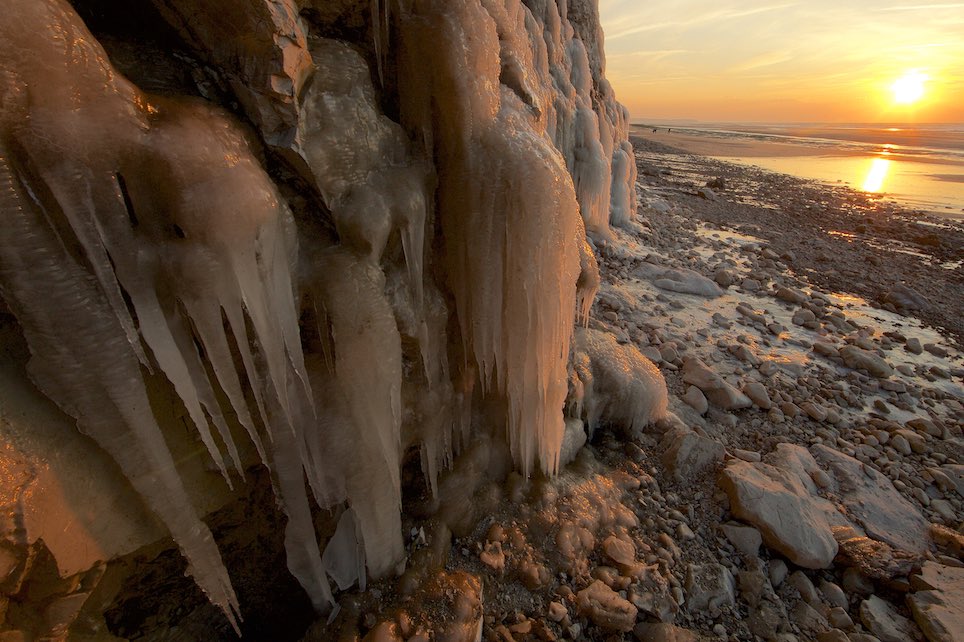
Escalles - 1DX - 14 mm - 1/50 - 500 ISO - f/22
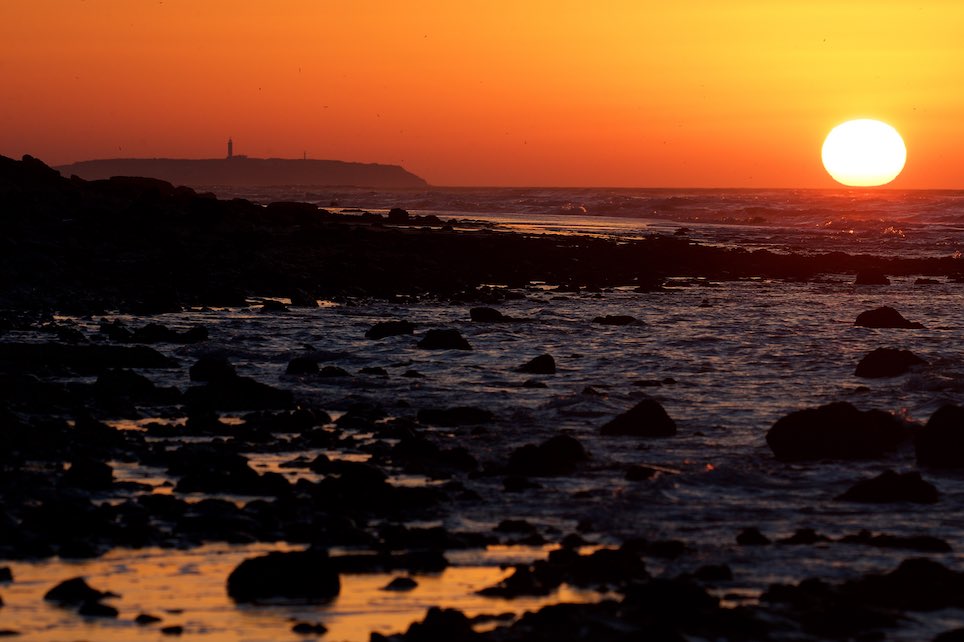
Wissant - 1DX - 230 mm - 1/400 - 400 ISO - f/9
A single camera body is sufficient, with good high-ISO performance. Burst rate does not matter: this is landscape photography.
Using several lenses allows you to vary your compositions, but the essential thing is to have a telephoto lens:
– A standard telephoto lens 70-200mm: Canon 70-200 f/2.8, Tamron 70-200 f/2.8, Sigma 70-200 f/2.8, Nikon 70-200 f/2.8, or Fujifilm 50-140.
– Optionally, a long telephoto lens: a 300mm, a 400mm, or even longer. Personally, I systematically use a Canon RF 100-500mm L for a sunset, which allows me to “reach” for the Sun and give it more presence in the image.
Before reading the rest of this guide, I recommend reading the photography basics to expose your image correctly (neither too dark nor too bright).
In short, landscape photography requires a large depth of field, meaning a large area of sharpness.
To achieve this, simply stop down the aperture.
The main standardized aperture values are: f/2.8, f/3.5, f/4, f/4.5, f/5.6, f/6.3, f/8, f/9, f/11, f/13, f/16, f/18, f/20, f/22, f/25.
The larger the number after f/, the greater the area of sharpness. So for a sunset photograph, as there is less light than during the day, choose intermediate values between f/5.6 and f/11.
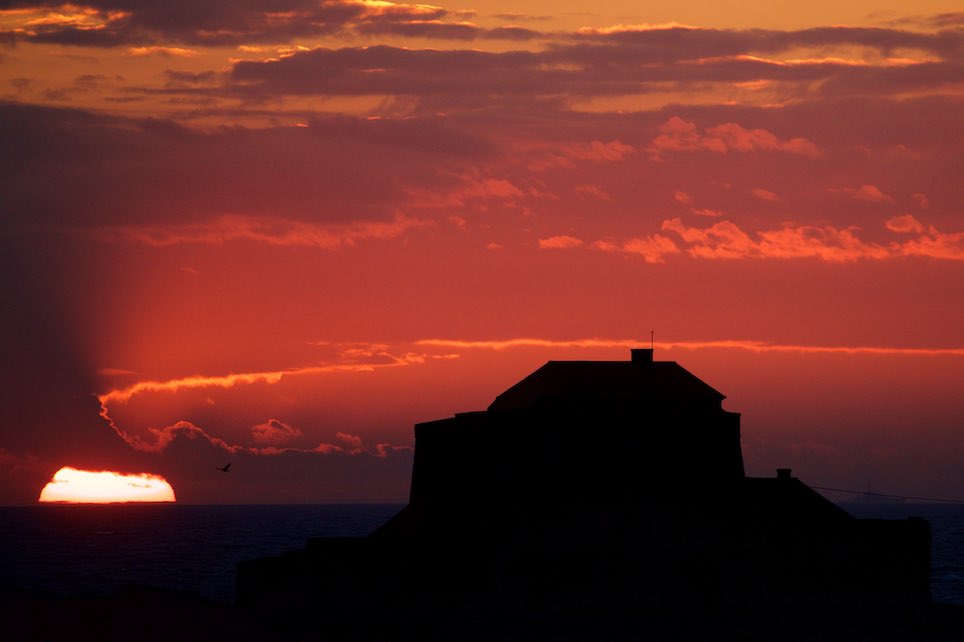
Ambleteuse - 1DX - 400 mm - 1/500 - 640 ISO - f/6.3
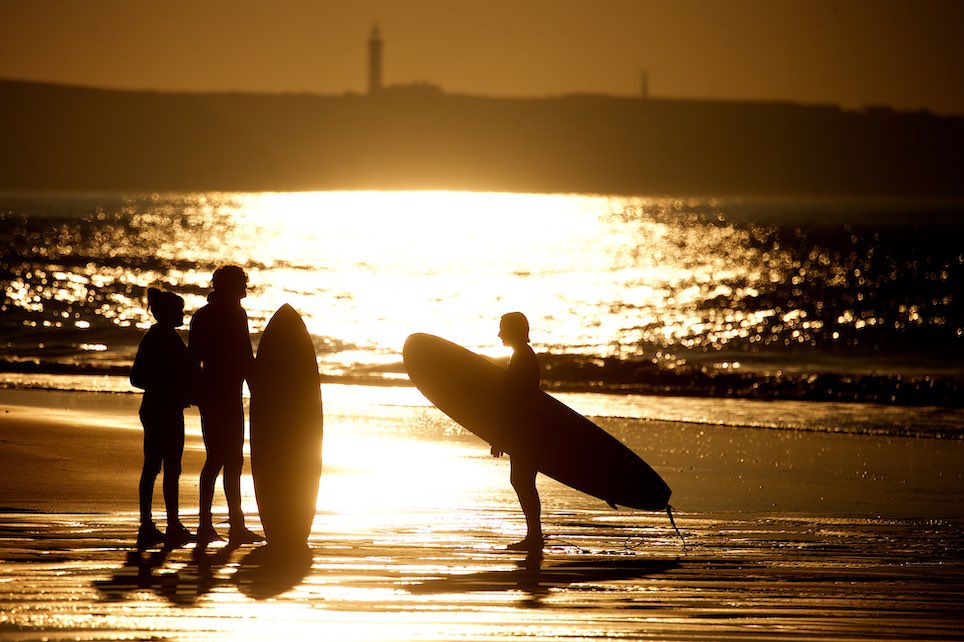
Wissant - 1DX - 400 mm - 1/8000 - 125 ISO - f/5.6
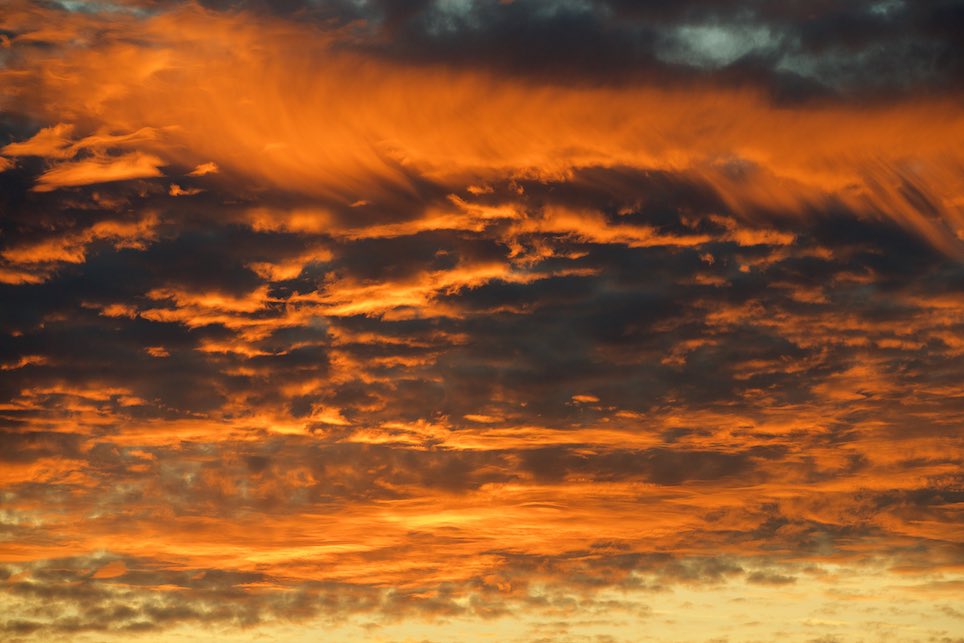
Wimereux - 1DX - 160 mm - 1/400 - 800 ISO - f/5.6
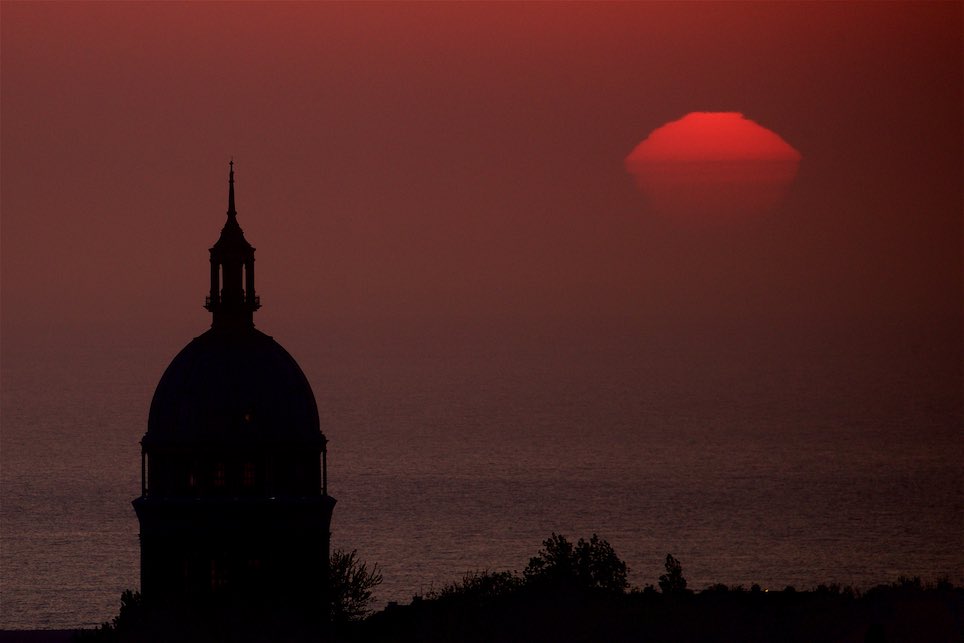
Boulogne - 1DX - 400 mm - 1/250 (stabilisé) - 320 ISO - f/5.6
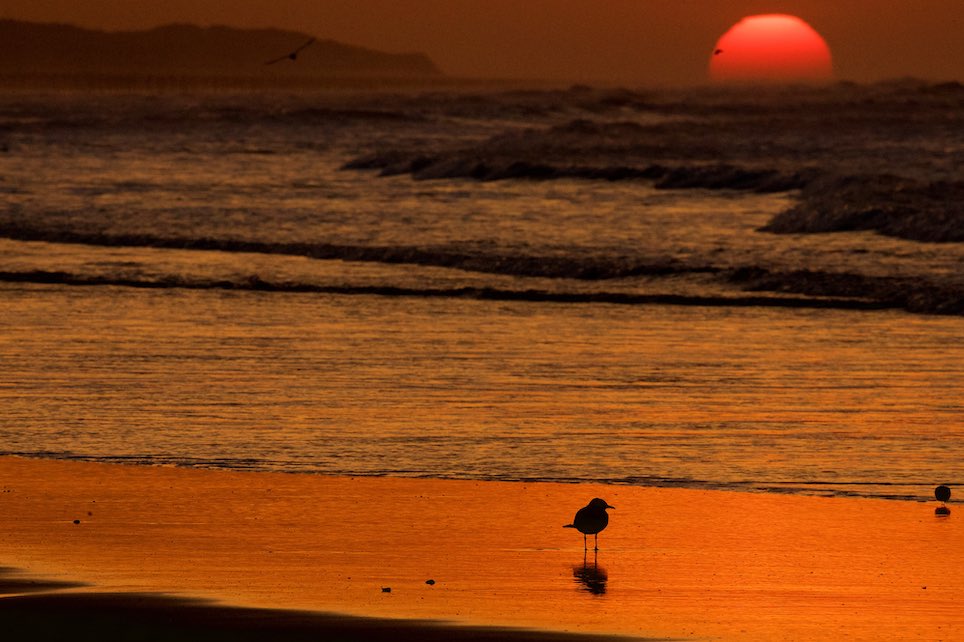
Calais - 1DX - 380 mm - 1/1000 - 2500 ISO - f/16
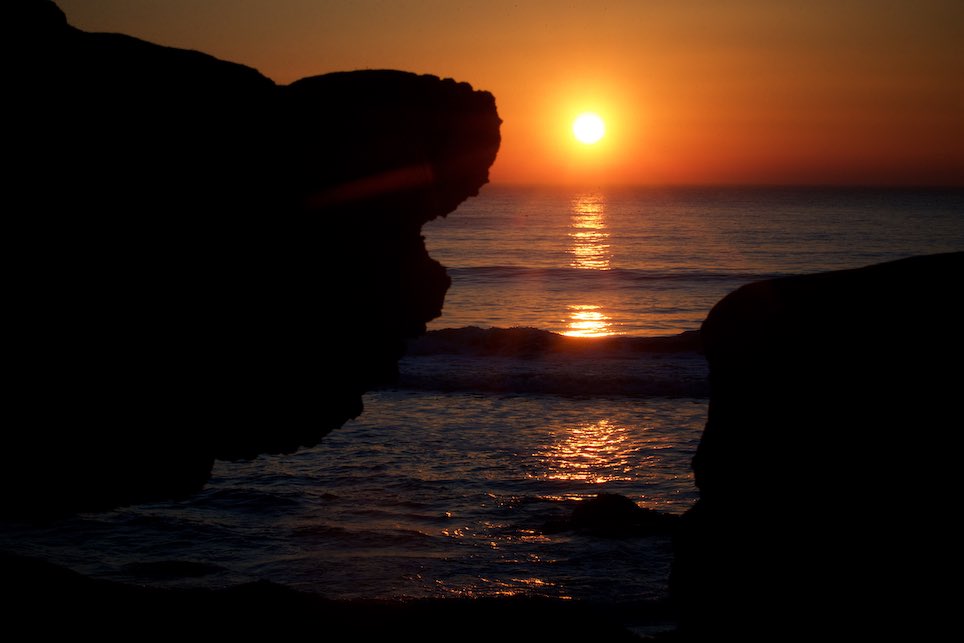
Ambleteuse - 1DX - 100 mm - 1/320 - 1000 ISO - f/25
Framing, composition and location: these are the most important things for making your image aesthetically pleasing; technique is ultimately secondary.
A sunset with the sea and sand in the foreground: what could be more ordinary? It could have been taken anywhere. Try to include clues in the image so that the viewer can guess the location.
What will make the difference are the elements in your composition, and therefore the place where you are standing. By the water, the composition will not necessarily be ideal:
step back to include other backlit elements in your photograph: a ship, a monument, walkers, a kitesurfer, an animal, a cliff, a couple holding hands...
This is also where a long telephoto lens really makes sense: the Sun will appear larger, and you can move farther back to find the ideal spot.
You do not need to be an excellent photographer to get a beautiful sunset, but you do need to know the best spots in your area by heart, and/or scout locations over several days.
Where does the Sun set, and at what time? Once you have found a good spot, you can return the next day or the day after if the weather is on your side.
You can use smartphone apps such as Photopills (iOS and Android) or Sun Surveyor (Android) for advance scouting.
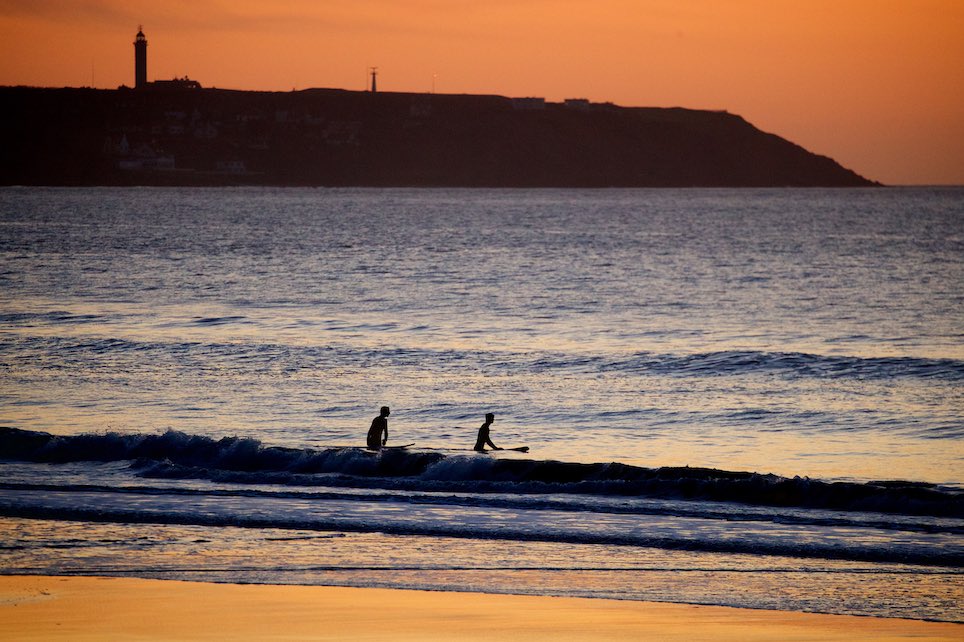
Wissant - 1DX - 400 mm - 1/400 - 2500 ISO - f/5.6
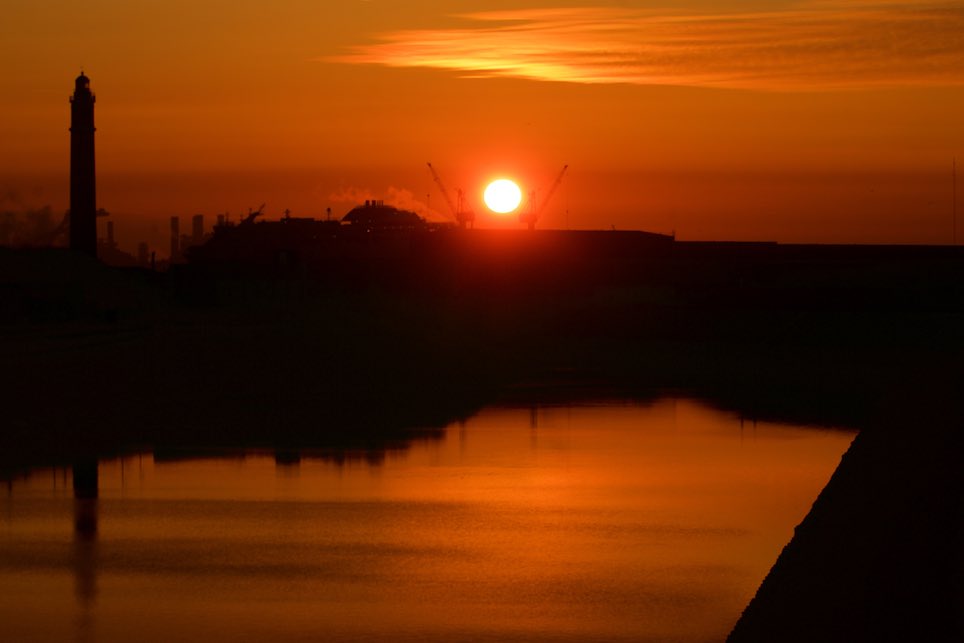
Malo - 1DX - 100 mm - 1/1000 - 250 ISO - f/5.6
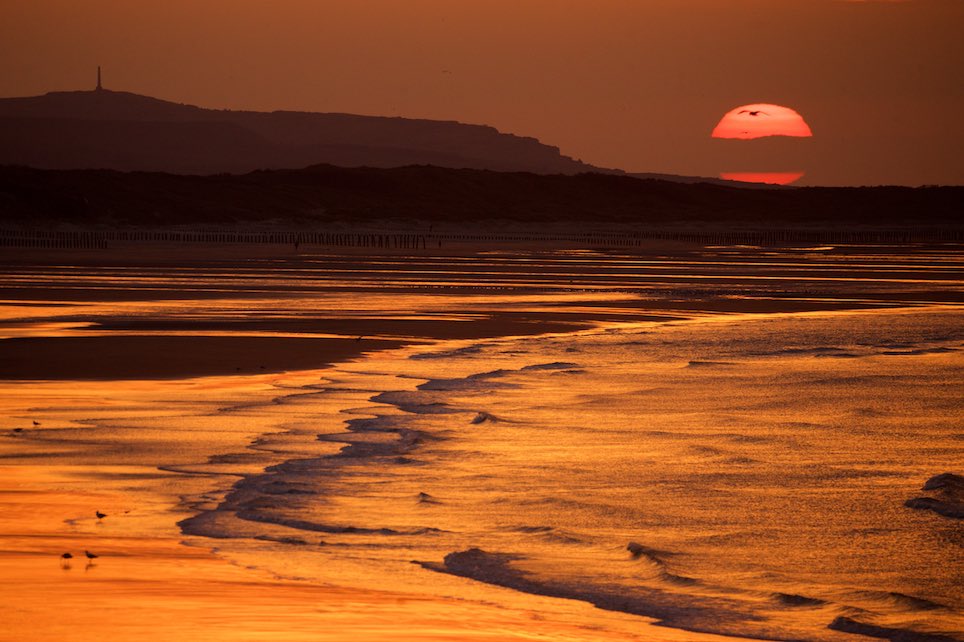
Calais-Blériot - 1DX - 330 mm - 1/500 - 640 ISO - f/5.6
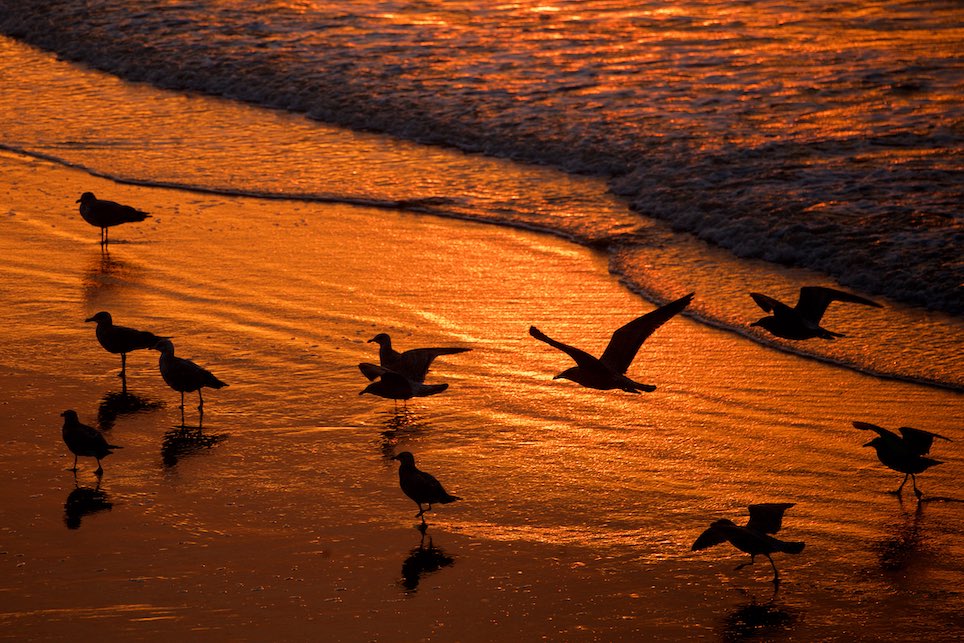
Calais - 1DX - 350 mm - 1/500 - 320 ISO - f/5.6
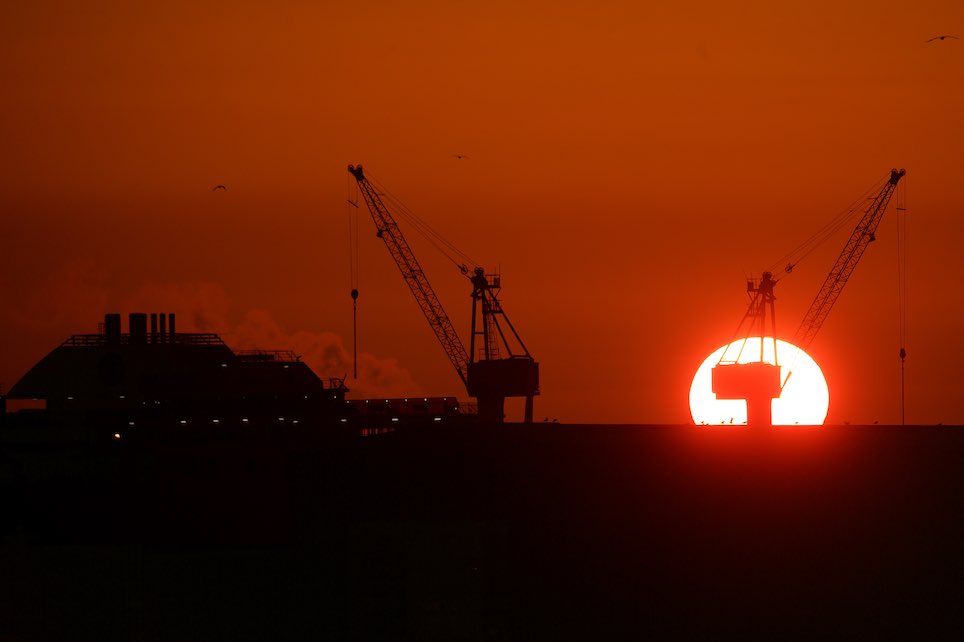
Dunkerque - 1DX - 400 mm - 1/800 - 250 ISO - f/5.6
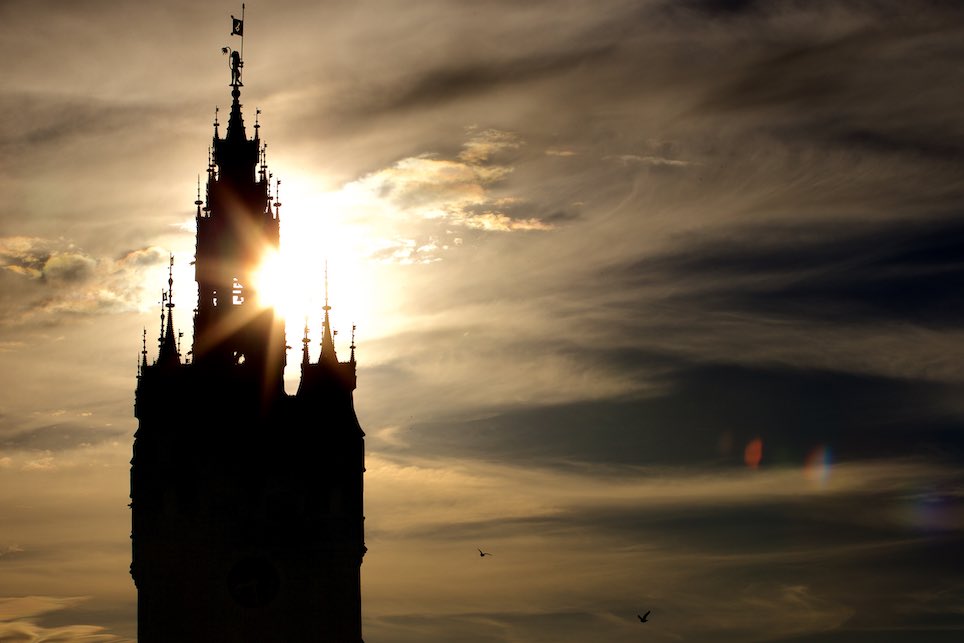
Douai - 1DX - 100 mm - 1/400 - 100 ISO - f/25
PS: All the sunset photographs in this article were taken in my region, Pas-de-Calais, and to a lesser extent in the Nord department. The Hauts-de-France region is pretty nice, isn’t it? ;)
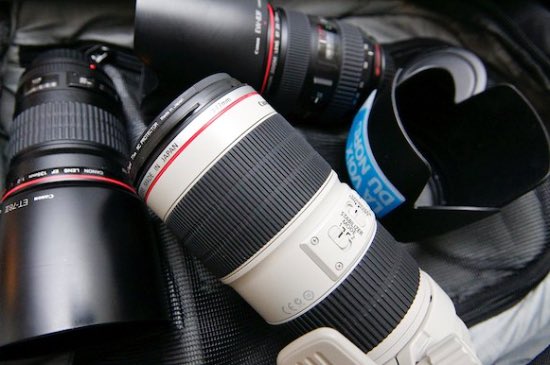
How to choose a lens?
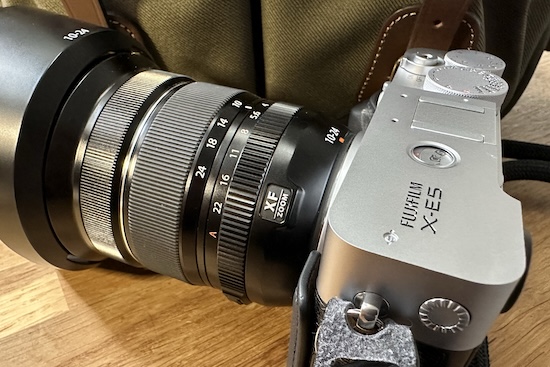
The lens is the component that has the greatest impact on image sharpness [...]
How to choose a camera?
Today, the choice is mainly between mirrorless cameras and the used market [...]
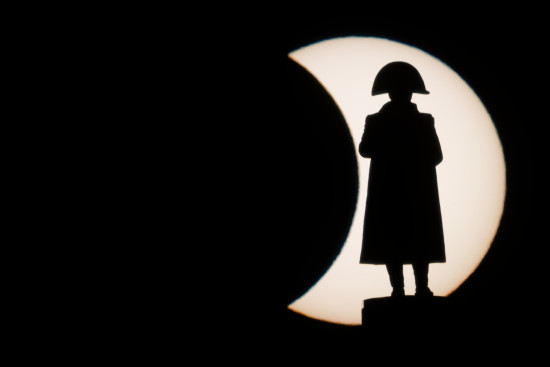
How I photographed Napoleon during the solar eclipse?
An image like this does not happen by chance [...]
How I set up my camera
There is obviously no universal setting that works for every situation. The choices [...]
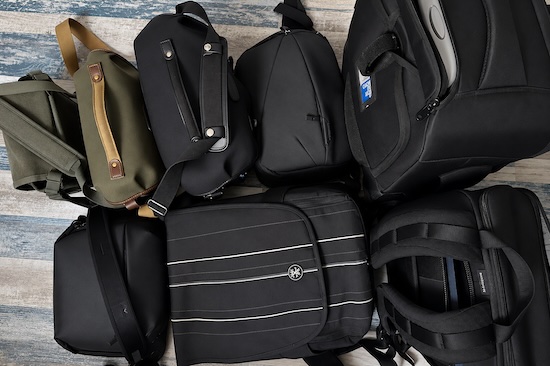
How to choose a camera bag
Finding the perfect camera bag to carry and protect your valuable equipment is [...]
How to choose a computer?
Clearly, in 2026, any recent laptop or desktop computer, whether PC or Mac, can [...]
How to choose a speedlight?
A speedlight is far from essential for taking good photographs. Recent cameras [...]
Photographing amateur football
For those getting started in sports photography, covering an amateur football match is a good choice [...]
Recovering deleted photos
Accidentally deleting the contents of a memory card by formatting it can happen to anyone: don't panic [...]
My workflow with DxO and Photo Mechanic
Why I spend less than a minute (per photo) on post-processing my assignments [...]
Photographing sports
Sports photography is quite a challenging field to master. It requires [...]
Getting press accreditation
Press accreditation is the essential pass that allows you to photograph a concert, event [...]
Photographing a concert
Photographing a concert or show is relatively complex, but very rewarding [...]

Photographing a sunset
Photographing a sunset is a real treat for both the eyes and the photographer, impossible to [...]
10 tips for better photos
A few tips, in no particular order, to avoid common mistakes. The very first tip [...]
How to create a panning effect?
Essential for photographing motorsports such as rallies, F1 or [...]
Photography in the rain
As I live in Pas-de-Calais, I should have some expertise when it comes to answering this [...]
Photography basics
When taking a photograph, the photographer can adjust four parameters to compose and control [...]